Venice
The only city where the airport transfer is the first highlight.
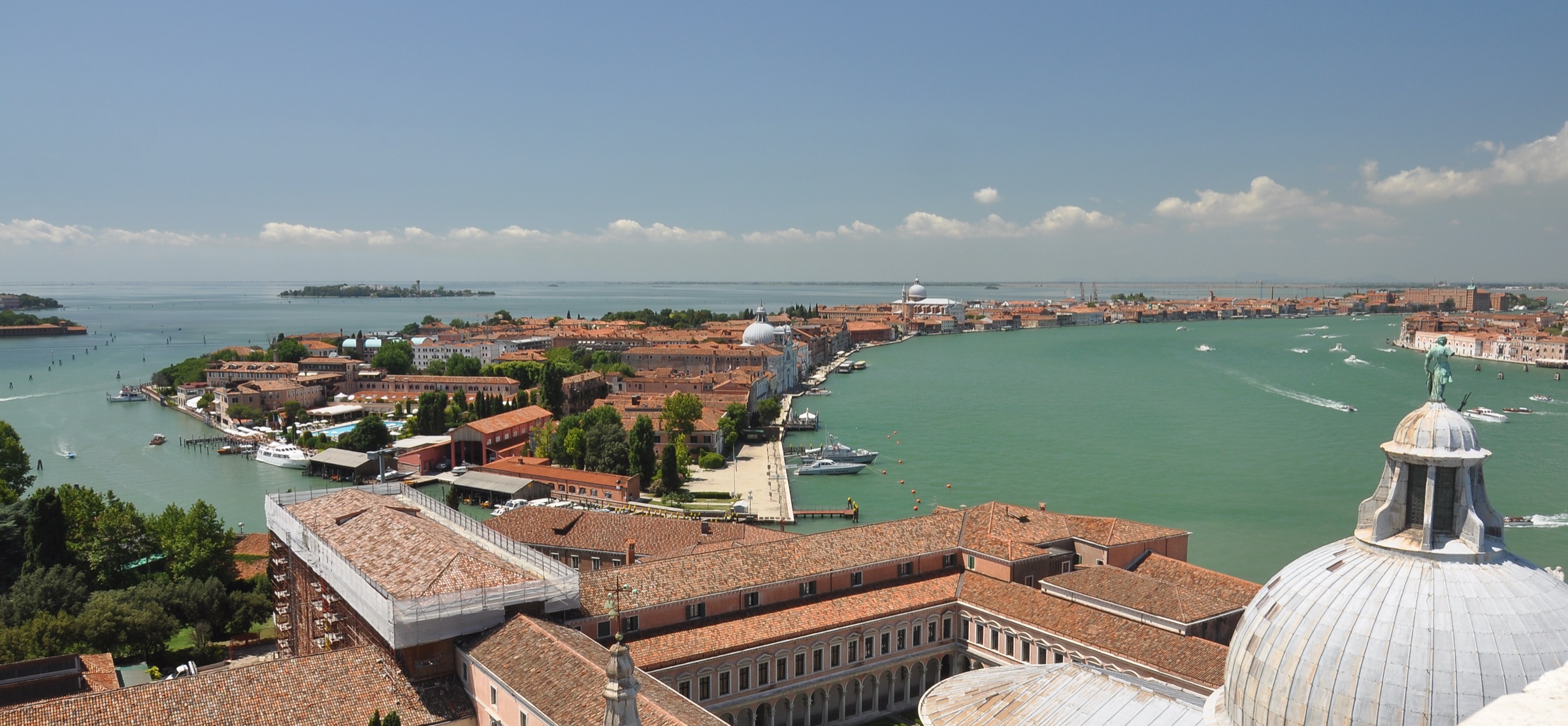
Venice needs no introduction, which is exactly why it is so easy to get wrong. Beyond the crowds of St Mark's is a city of private palazzi, quiet campi and candlelit canals, set in a lagoon full of islands: Giudecca just across the water, the Lido's long beach, Murano's glass furnaces, Burano's painted houses and the near-silent calm of Torcello. Guests landing at Marco Polo can step onto a private water taxi and be delivered to their hotel's own landing stage in around half an hour, which rather sets the tone.
For planners, Venice rewards small and mid-sized groups. Bridges, narrow lanes and boat-only logistics make it ideal for an intimate dinner in a palazzo on the Grand Canal and less so for a cast of hundreds; larger conferences tend to base themselves on Giudecca, where a converted flour mill holds the city's biggest hotel conference space, or out on the Lido. Fill the days with private boats across the lagoon and a morning at a Murano furnace, add a curated walk through the Biennale, and book Carnival early. Everyone else has the same idea.
- Leadership retreats
- Private palazzo dinners
- Client entertaining
- Art and culture programmes
- Lagoon and boat days
April to June and September to October are the sweet spots; July and August are hot and busy. Carnival falls in February or early March, and the Biennale runs from spring to late November each year, alternating art (even years) and architecture (odd years). Late autumn and winter bring acqua alta: the MOSE barriers now hold back the highest tides, though low-lying St Mark's Square can still flood. Day visitors pay an access fee on selected peak days; overnight hotel guests are exempt.
Where to stay
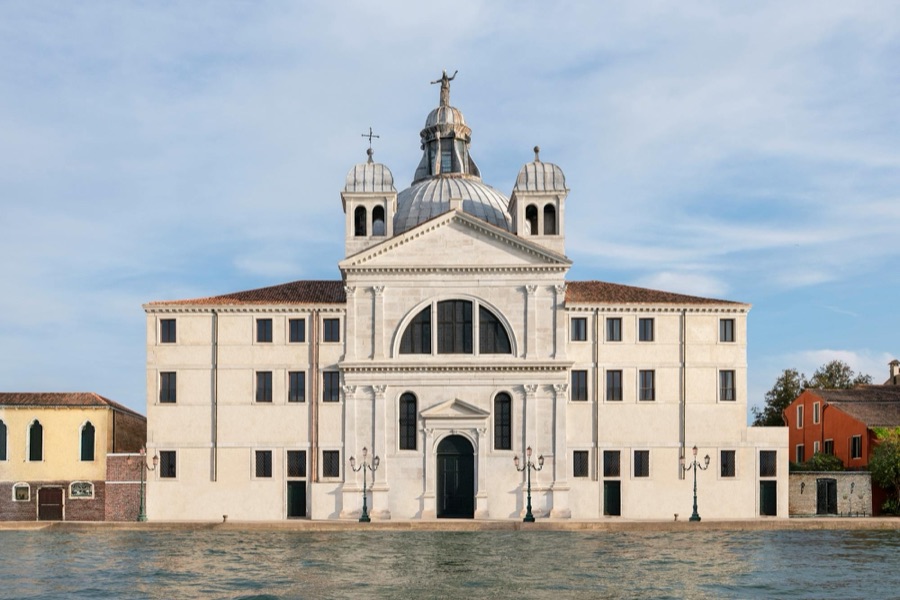
Airelles Palladio, Venice
A Palladio facade, four star chefs and St Mark's across the water. Subtle, it isn't.
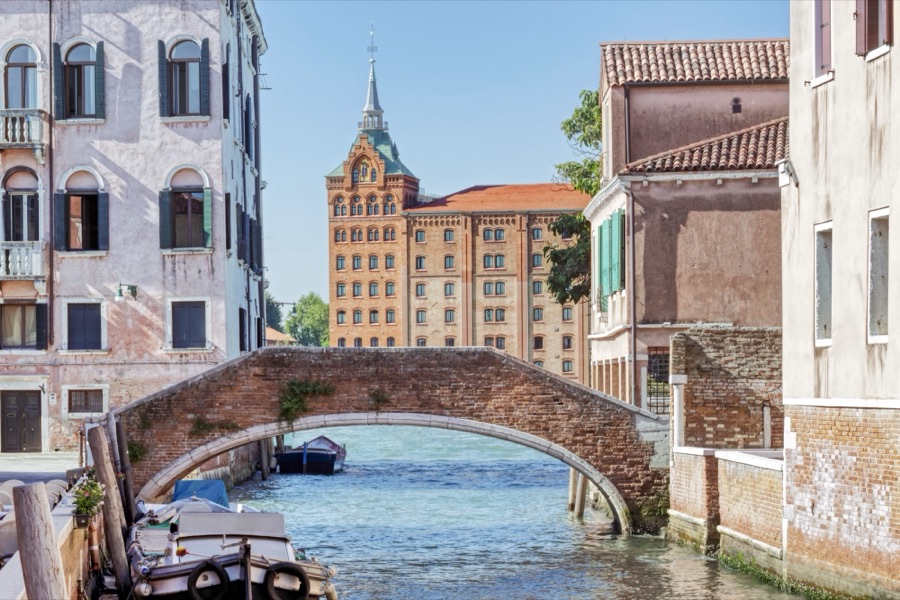
Hilton Molino Stucky Venice
A neo-Gothic flour mill that now runs Venice's biggest conferences, with the highest bar in town for the debrief.
 One Michelin star – Oro
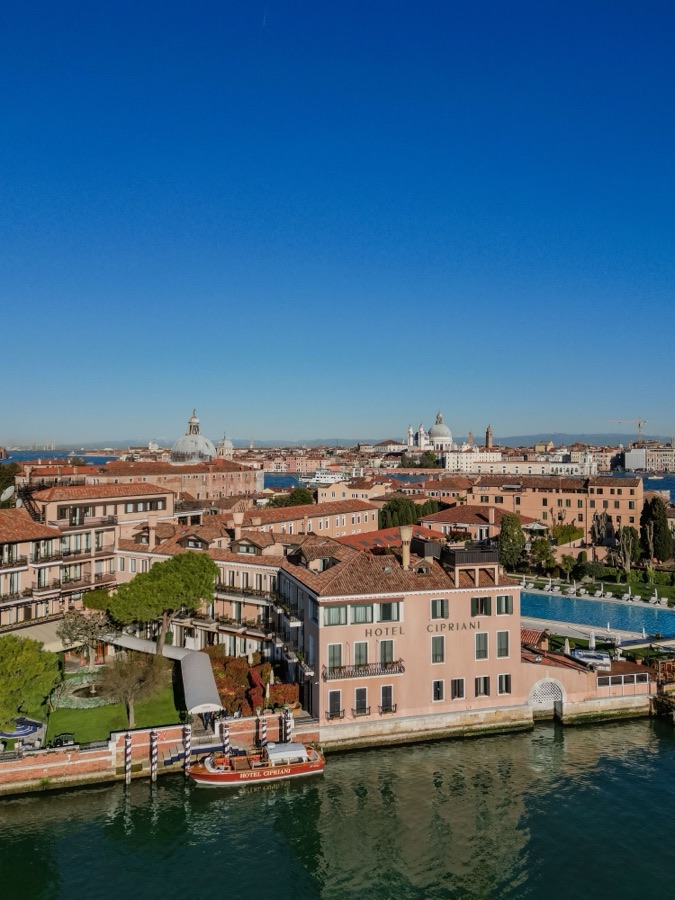
Hotel Cipriani, A Belmond Hotel
Five minutes from St Mark's by boat, and a world away from the queue for it.